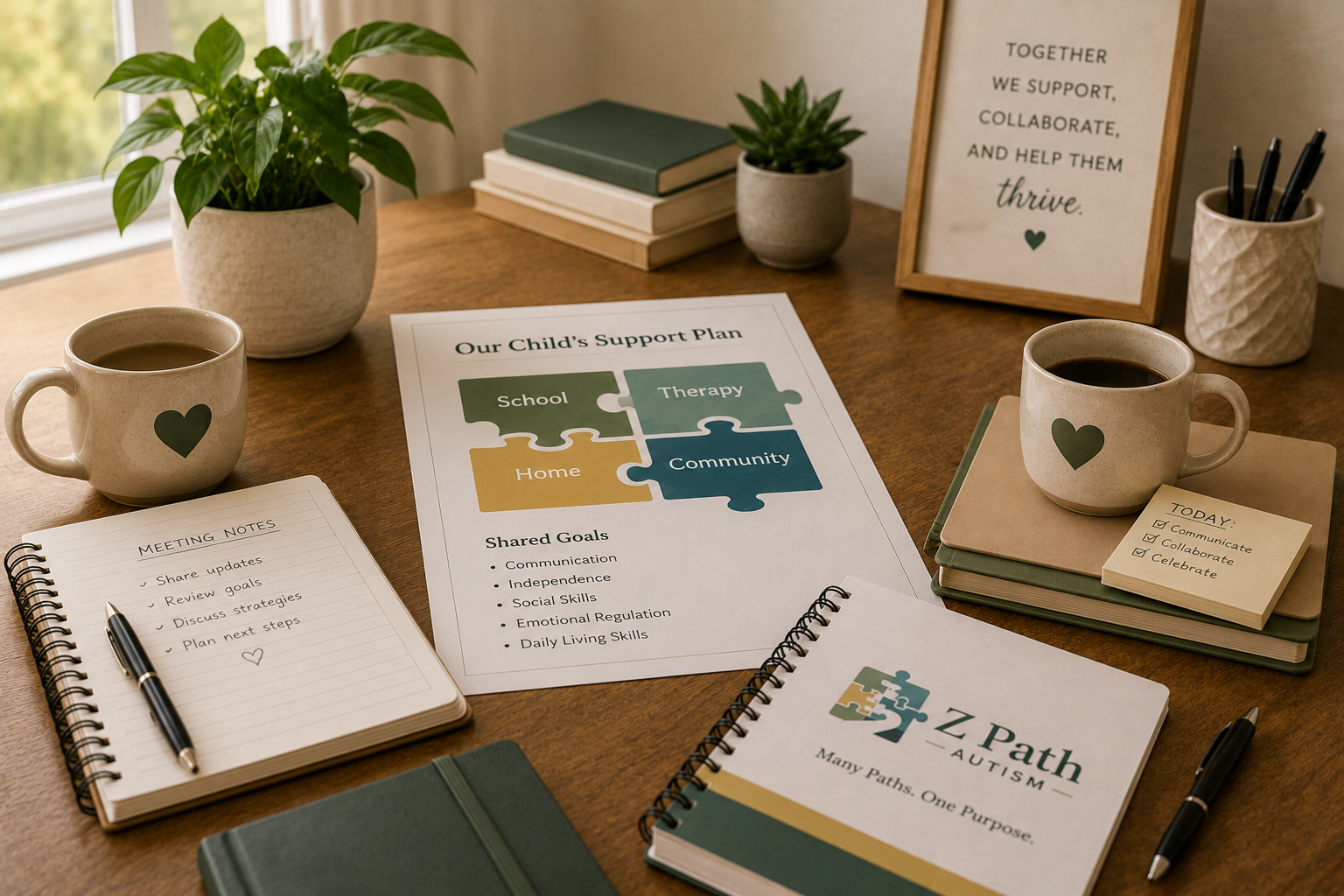
Tips and Tools for Everyday Life

Practical advice to help you get through daily challenges - getting out the door on time, eating, routine changes, safety, communication, and more.

Common Terms for Autism Supports

Visual supportA picture, symbol, written word, object, or checklist that makes information easier to see and remember.
Visual schedulePictures or words showing what will happen and in what order—for example: bathroom, clothes, breakfast, shoes.
Social narrativeA short, personalized story that explains an unfamiliar or confusing situation, such as a haircut or dentist visit. It describes what might happen and what choices or supports are available.
AACAugmentative and alternative communication. Any way of communicating besides—or in addition to—speech, including gestures, picture boards, typing, and speech-generating apps.
RegulationHow the body and brain manage energy, emotions, attention, and sensory input. Regulation does not mean being perfectly calm or compliant.
Support providersThe adults who help your child outside the immediate family: teachers, childcare staff, speech-language pathologists, occupational or physical therapists, behavior professionals, direct-support professionals, respite workers, and others.

Choose the moment you need help with

Open a section and try an idea. Keep what helps.

💬My child has trouble telling us what they need

Communication can include looking, reaching, moving away, gestures, pictures, typing, or a device that speaks.

  • Show two choices instead of asking an open-ended question.
  • Pause. Give the child time to respond.
  • Point to a word while saying it instead of testing the child.
  • Keep communication available everywhere. Teach “no,” “stop,” and “break.”
Try this todayPrint or draw six boxes labeled YES, NO, HELP, STOP, MORE, and ALL DONE. Put one copy on the refrigerator and one in the child’s bag.

Helpful tools

CboardFree picture-based AAC web app with text-to-speechOpen Cboard →
AssistiveWare Core BoardsFree printable communication boards and AAC learning resourcesDownload boards →
Sesame Street Communication BoardA beginner-friendly board using familiar characters and core wordsFind autism resources →
ARASAACFree pictograms for custom boards, schedules, and storiesBrowse pictograms →
When to ask for help: A speech-language pathologist with AAC experience can help identify a system that allows more than requesting favorite items. A full system should grow with the person and support questions, comments, feelings, refusal, relationships, learning, and self-advocacy.
⏱️Transitions, waiting, or getting started are hard
  • Visual schedule: shows what will happen.
  • First-then board: shows the next two steps.
  • Visual timer: shows how much time remains.
  • Countdown: gives warnings before a change.
Try this todayChoose one repeated struggle. Use two photos from your phone to make a FIRST–THEN board. Pair it with the same short words each time.
PictoExpressCreate printable picture sequences for daily situationsCreate a sequence →
Time TimerPhysical and app-based timers that show time disappearingSee timer apps →
Visual Countdown TimerSimple mobile visual timer updated in 2026View Android app →
OCALI First-Then GuideInstructions for creating and using first-then supportsOpen the guide →
🍽️Eating is extremely limited or stressful

Texture, smell, temperature, brand, chewing demands, pain, constipation, reflux, or anxiety can affect eating.

  • Serve one accepted “safe food” with the meal.
  • Keep learning-food portions tiny and separate when needed.
  • Count looking, touching, smelling, or tasting as progress.
  • Try food chaining: move to a very similar food.
  • For early self-feeding, rotate three preloaded spoons using the Three Spoon Circus.
About Soylent and other meal replacements: Soylent is marketed as an adult meal replacement, not a general pediatric feeding solution. If growth or nutrient intake is concerning, ask the child’s pediatrician or a pediatric registered dietitian whether a child-specific oral nutrition supplement is appropriate. Do not replace meals routinely without individualized guidance.
Seek professional help promptly for weight loss or poor growth, choking or coughing with food, pain, dehydration, fewer and fewer accepted foods, suspected nutrient deficiency, or severe distress. A pediatrician may refer to gastroenterology, a pediatric dietitian, or a feeding team that includes speech-language pathology or occupational therapy.
Exploring Feeding Behavior in AutismParent guide covering sensory and mealtime factorsOpen guide →
CHOP Feeding Disorders RoadmapInformation about food selectivity and when support may be neededRead the roadmap →
Three Spoon CircusPediatric occupational therapist’s self-feeding methodSee how it works →
CDC Picky-Eating TipsSimple, low-pressure ideas for young childrenRead CDC tips →
🎧Noise, clothing, movement, or crowds overwhelm my child

Sound, light, touch, taste, smell, movement, and internal body signals can feel too strong—or not strong enough.

  • Reduce input with headphones, sunglasses, soft clothing, quieter entrances, or shorter visits.
  • Add helpful movement, pressure, chewing, rocking, or fidgeting when the child seeks it.
  • Pack a small sensory and communication kit for outings.
  • Offer a break before distress peaks. Track patterns.
Try this todayMake a “help my body” menu with three options your child already likes: quiet space, movement, or squeeze/pressure. Let the child point to one.
Autism Level UP!Free autistic-informed tools for regulation, communication, predictability, and routineExplore tools →
ASSIST Sensory ToolkitPlain-language sensory information for families and providersOpen toolkit →
Simple Sensory ActivitiesWater pouring, dough, outdoor textures, movement, and other low-cost ideasBrowse activities →
🛁Sleep, toileting, toothbrushing, or haircuts are difficult
  1. Rule out pain or a medical problem.
  2. Identify the exact difficult step.
  3. Show the sequence and practice when there is no rush.
  4. Offer real choices, breaks, and a clear finish.
SLEEPMake bedtime visible

Use the same 3–5 picture sequence each night, reduce stimulating input, and note sleep and wake times. Persistent snoring, breathing pauses, pain, or severe sleep loss belongs with a healthcare professional.

Sleep strategies toolkit →
TOILETINGTeach one routine, not one demand

Track natural timing, use consistent bathroom words or symbols, show each step, choose clothing the child can manage, and coordinate the same routine across home and school.

Toilet-training guide →
HAIRCUTSPractice before the appointment

Visit the location, watch a short video, touch inactive tools, choose scissors or clippers when possible, schedule breaks, and bring preferred sensory supports.

Haircut guide and visual schedule →
DENTISTAsk for accommodations early

Request a preview visit, first or quiet appointment, extra time, explanations before touch, breaks, and permission to use headphones, sunglasses, or a comfort item.

Dental visit stories →
📺Shows and books that build language, emotional skills, and belonging

Watch together when possible. Pause, copy a gesture, name a feeling, or connect the story to real life.

SHOW · AGES 4–8Carl the Collector

PBS KIDS series centered on Carl, an autistic raccoon, and a neurodiverse group of friends. Useful for representation, friendships, interests, flexibility, and talking about different needs.

Watch episodes →
VIDEOS · AGES 1–6Sesame Street and Julia

Videos, stories, printables, and a communication board featuring Julia, a young autistic character. Resources address connection, routines, siblings, community, and inclusion.

Explore free resources →
VIDEO COLLECTION · INCLUSIONPBS KIDS Autism Acceptance Playlist

Short clips and episodes featuring autistic characters and autism-related stories, including Max from Daniel Tiger’s Neighborhood and characters from Carl the Collector.

Open the PBS KIDS playlist →
SHOW · EARLY LANGUAGEMs. Rachel

Slow-paced, playful videos that model gestures, songs, early words, phonics, and turn-taking. Ms. Rachel is not a speech therapist; children with speech concerns may still need an evaluation and individualized services.

Speech-delay resources →
BOOK SERIES · FEELINGSA Little SPOT and Scribble SPOT

Colorful books that give children and adults shared words for feelings such as anger, anxiety, sadness, confidence, calm, and mixed-up emotions.

Browse the series →
BOOK · FRIENDSHIPA Friend for Henry

A picture book told from the perspective of an autistic boy seeking a friend who respects his way of connecting and his preference for order.

View the book →
BOOK LIST · NEURODIVERSITYInclusive Children’s Books

A large curated list of children’s books featuring autism and neurodiversity. Preview books first because language, representation, and fit vary.

Browse the book list →
Try this after a show or bookAsk concrete questions instead of “What did you learn?” Try: “What made Carl uncomfortable?” “What helped?” “Do you want to try that idea—or would something else help you?”
🛟My child may run, wander, or become separated from us
  • Identify likely destinations, especially nearby water.
  • Secure the home while preserving emergency exits.
  • Practice stopping, waiting, identifying caregivers, and showing an ID card.
  • Keep a current photo and one-page emergency profile.
  • Share the plan with every regular caregiver. Water-safety lessons do not replace supervision.
Big Red Safety BoxFree wandering-prevention materials for eligible autism familiesRequest resources →
Autism Safety KitPrintable emergency and caregiver planning formsOpen safety kit →
Project LifesaverLocal rapid-response program for eligible people who wanderFind an agency →
Durham County Project LifesaverTriangle-area enrollment informationView Durham program →
🤝Too many adults are using different approaches

The team may include teachers, childcare staff, therapists, behavior professionals, direct-support workers, coaches, and healthcare professionals.

Create one “How to support me” page

  • How I communicate, including pain and the need for a break
  • What I enjoy and signs I am becoming overwhelmed
  • What helps—and what makes things worse
  • Key sensory, food, medical, toileting, and safety information
  • The visuals or AAC system I use
A useful team questionInstead of asking only “How was behavior today?” ask: “What was happening, what was the child communicating, what support was tried, and what happened next?”
UNC AFIRM ModulesFree step-by-step training on visual supports, AAC, social narratives, task analysis, video modeling, and other practicesBrowse modules →
Vanderbilt TRIAD ResourcesFree materials for home, school, and service settings, including multilingual resourcesBrowse resources →
Autism Level UP!Shared tools for regulation, energy, communication, predictability, and self-understandingExplore tools →

This page will keep growing!

The most useful ideas often come from autistic people, families, teachers, therapists, and direct-support professionals solving real problems together. Share a tool, routine, show, book, printable, or everyday strategy that has helped.

We welcome your suggestions! →